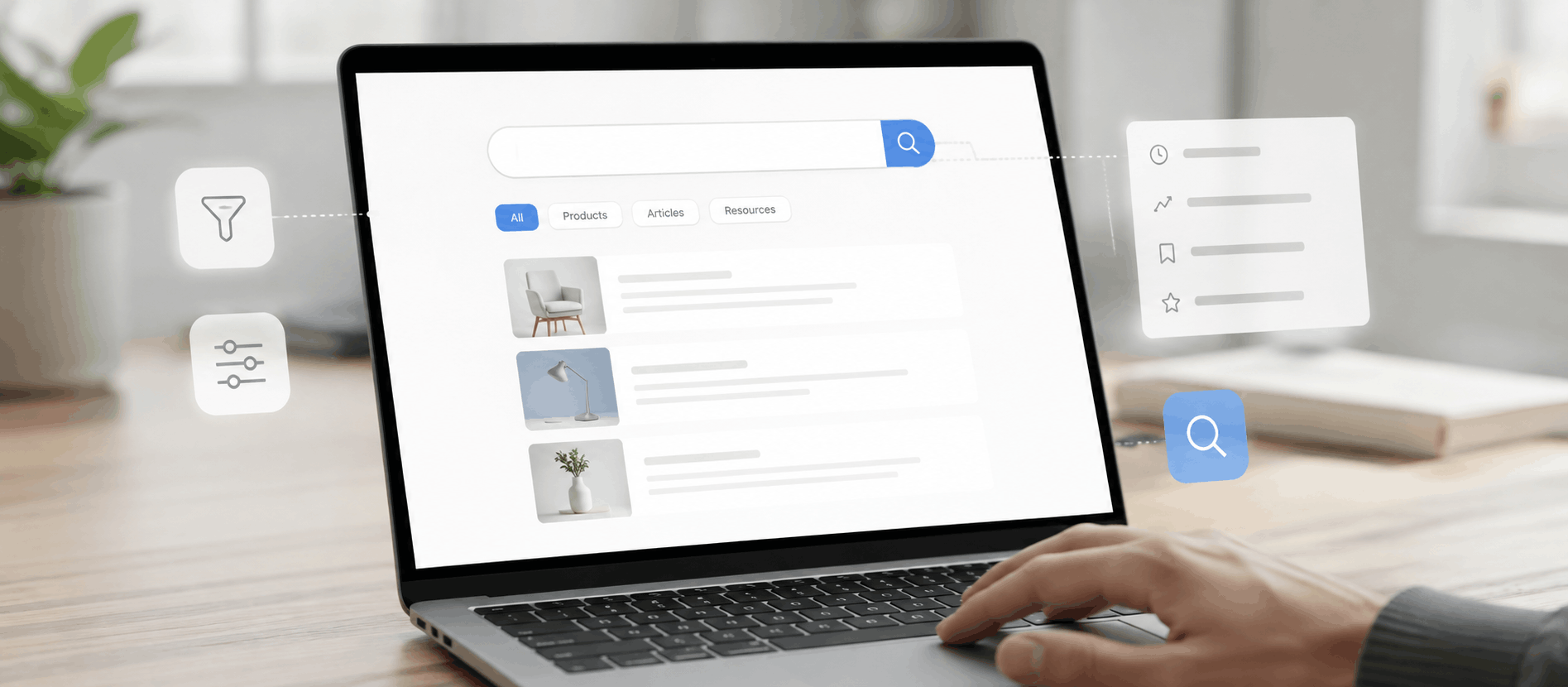
Short answer: Minimalist UI/UX design works because it removes cognitive load — fewer choices, faster decisions, less friction. But “less” only means “more” when what remains is intentional. Stripping features without understanding user goals creates empty screens, not good UX. The goal is purposeful simplicity, not aesthetic minimalism. (Further reading: NN/g — Simplicity vs. Discoverability.)
Last updated: June 9, 2026
13 min read · 2,847 words
Introduction: When Simplicity Becomes the Strategy
Open any high-performing digital product today and notice what is not there. There are no competing animations. There are no cluttered navigation bars. There are no decorative elements fighting for your attention. What you find instead is a clear path. One goal. One next step. That deliberate restraint is not laziness or lack of effort. It is a design philosophy that has consistently outperformed complexity across every major category of digital product.
Minimalist UI/UX design operates on a simple but powerful principle: every element on a screen should earn its place. If an interface element does not help the user complete a task, understand information, or feel confident about a decision — it should not exist. That discipline, applied consistently across an entire product, produces the kind of user experience that feels almost invisible. Users do not think about the interface. They simply accomplish what they came to do.
This article explores why minimalism has become the dominant philosophy in UX Research, what the research says about how it affects user experience, and how it directly impacts business outcomes including customer retention and conversion. It also explains what separates genuine minimalism from oversimplification — and why the difference matters enormously in practice.
What this article covers: The psychology behind minimalist design. How simplicity reduces cognitive load. The measurable business case for clean interfaces. Common minimalist principles your digital product needs. And how expert UI/UX design service transforms these principles into real product outcomes.
What Minimalist UIUX Design Actually Means
Minimalism in design is widely misunderstood. It is frequently equated with white space, flat colours, and sparse layouts. Those are visual symptoms of a minimalist approach, not its definition. True minimalism in UI/UX design service is a decision-making framework. Every design choice is evaluated against a single question: does this help the user? If the answer is no, the element is removed. If the answer is yes, it stays — and only then is the question of how it looks addressed.
This distinction matters because it separates minimalism from oversimplification. A product that removes too much — stripping away features, hiding necessary information, or making critical actions hard to find in the name of visual cleanliness — has misapplied the philosophy. Genuine minimalism never sacrifices function for aesthetics. It achieves aesthetics through rigorous attention to function. According to the Interaction Design Foundation, the most successful minimalist interfaces are those that appear simple to users while concealing significant design complexity underneath.
The practical implication is that minimalist UI/UX design is not less work than complex design. It is more. Removing something from an interface while preserving or improving the user’s ability to complete their task requires a deeper understanding of that task than adding elements does. This is why UX UI mastery — the kind built through years of research, testing, and refinement — is the foundation of great minimalist work. It cannot be faked with a clean-looking template.
“Perfection is achieved not when there is nothing more to add, but when there is nothing left to take away.” — Antoine de Saint-Exupéry
The Psychology Behind Minimalism: Why Less Feels Better
Human attention is a finite resource. Every element on a screen — every button, label, icon, animation, colour variation, and text block — consumes a portion of it. Cognitive load is the technical term for the mental effort required to process what you see. When cognitive load is high, users feel tired, confused, and uncertain. When it is low, they feel competent, confident, and in control. Minimalist UI/UX design is the most direct and reliable way to reduce cognitive load in a digital product.
The psychological research on this is extensive. Hick’s Law, one of the foundational principles of UX design, states that the time required to make a decision increases with the number and complexity of choices available. A navigation menu with twelve items takes significantly longer to parse than one with five. A form with twenty fields produces measurably higher abandonment rates than one with eight. Every additional element you add to an interface is a decision you are asking your user to make. Minimalism reduces the number of those decisions to the absolute necessary minimum.
There is also an emotional dimension that extends beyond pure efficiency. Clean, well-spaced interfaces consistently produce higher trust scores in usability research. According to a Stanford Web Credibility Study, visual design quality is the single most cited factor in how users judge the credibility of a website — outweighing content quality, functionality, and even brand recognition. A cluttered, visually noisy interface signals to users that the organization behind it lacks attention to detail. A clean, purposeful one signals the opposite.
This is not superficial. The emotional response to visual simplicity happens within milliseconds of a page loading. Users form strong impressions before they have read a single word of content. A best UI UX design company understands that this first moment is a trust-building opportunity — and that minimalism is one of the most reliable ways to capitalize on it.
The Business Case: UX in Reducing Customer Friction
Good design is not a cost. It is a revenue driver. The connection between UX in reducing customer friction and measurable business outcomes is one of the most well-documented relationships in the entire field of digital product development. Minimalist design, applied consistently, reduces friction at every point in the user journey — and reduced friction translates directly into higher conversion, lower churn, and stronger brand loyalty.
Conversion Rate Impact
The relationship between design simplicity and conversion performance is clear and consistent. Forrester Research has documented that a well-designed user interface can raise conversion rates by up to 200 percent. Better UX design overall can raise conversion rates by up to 400 percent. These are not marginal improvements. They represent the difference between a product that sustains a business and one that transforms it. Minimalist design contributes to conversion by reducing the cognitive effort required to take action — fewer distractions, clearer calls to action, and less visual competition around the moment of decision.
Bounce Rate and Engagement
Page load speed is directly affected by interface complexity. Every additional visual element, animation, and graphic asset adds weight to a page. Google’s Core Web Vitals research shows that pages loading in under two seconds have bounce rates approximately 9 percent lower than those loading in five seconds. Minimalist modern web design naturally produces lighter, faster pages — which means more users stay long enough to engage with content, understand the product, and convert.
Customer Retention and Satisfaction
Friction accumulates. A user who encounters one confusing navigation, one ambiguous button, and one unexpected modal on their first session is unlikely to return. A user who completes their goal without friction, without confusion, and without effort is not only more likely to return — they are more likely to recommend the product. According to the Nielsen Norman Group, improving usability through cleaner, simpler interfaces is the highest-ROI investment in user experience that most digital products can make. The return comes from retention rather than acquisition — which is consistently more cost-effective.
Core Principles of Minimalist UI/UX Design
Minimalism in the Future of UX Design is not a single aesthetic choice. It is a set of interconnected principles that reinforce each other across every layer of a product. Understanding these principles separately makes it easier to evaluate whether a design genuinely serves users — or simply looks clean while concealing poor decisions.
Visual Hierarchy Through Restraint
In a minimalist interface, contrast and scale do the work that colour and ornamentation do in complex designs. Size differences guide the eye. Spacing creates emphasis. A single accent colour signals action without competing against a palette of decorative tones. This approach to visual hierarchy is both more elegant and more functional than the alternative. Users know where to look because the design has made exactly one thing the most important thing on every screen. That clarity of focus is the hallmark of UX UI mastery in its most refined form.
White Space as a Design Element
White space — or negative space — is perhaps the most misunderstood tool in minimalist design. Non-designers often perceive it as waste. Experienced designers understand it as an active force. White space around a button increases the likelihood that users will notice and click it. White space between sections of content reduces the cognitive effort of reading. White space around typography allows the eye to parse text without strain. Every great UI UX design agency treats white space with the same care it applies to any other design element — because it has equivalent functional value.
Typography That Carries the Design
In minimal interfaces, typography does more of the visual work than in complex ones. Font choice, weight variation, size hierarchy, and line spacing all contribute directly to how users experience content. A clean, well-set typographic system can carry an entire interface without any decorative support. Conversely, weak typographic choices in a minimalist design are immediately exposed — because there is nothing else to distract from them. This is one of the reasons that modern web design at the highest level requires genuine typographic expertise, not just aesthetic preference.
Purposeful Colour
Minimalist colour palettes are deliberately limited. Typically one or two brand colours, one accent colour for primary actions, and a carefully considered neutral system. Each colour serves a specific communicative function. The accent marks what is clickable. The neutrals create depth without decoration. The brand colour establishes identity without dominating the interface. When every colour has a clear purpose, users learn the visual language of the product intuitively. Interfaces with large, unstructured colour palettes require users to interpret each colour contextually — which adds cognitive load rather than reducing it.
Interaction Design Without Noise
Animations and micro-interactions in minimalist design serve specific purposes. A button that responds subtly to a hover state confirms that it is interactive. A loading indicator prevents user anxiety during a wait. A success animation provides closure after a completed action. None of these animations exist for entertainment value. They exist to communicate state, confirm action, or reduce uncertainty. When an interaction element exists purely for visual interest, minimalist design removes it. What remains is a product that feels responsive, confident, and entirely in service of the user.
How Minimalism Applies Across Different Product Types
One of the most important qualities of minimalist design philosophy is its portability. The principles apply equally to a B2B SaaS dashboard, a consumer e-commerce experience, a mobile application, and a corporate website. The execution differs. The underlying discipline remains identical.
E-Commerce and Conversion-Focused Products
In e-commerce, minimalism directly addresses the most common conversion barriers. Product pages that lead with a single, high-quality image and a clear call to action consistently outperform those cluttered with competing elements. Checkout flows with fewer fields and fewer distractions consistently complete at higher rates. The Amazon checkout, Stripe’s payment flows, and Shopify’s best-performing themes all share one characteristic: they reduce the decision burden at every step. According to Baymard Institute’s checkout research, the average e-commerce site could improve its conversion rate by 35 percent through better checkout design alone.
SaaS and Dashboard Design
For software products, minimalism addresses a different but equally serious problem: information overload. Dashboard interfaces that present every available data point simultaneously produce analysis paralysis. Users cannot determine what matters. They spend time navigating rather than acting. A well-designed UI UX strategy applied to a SaaS dashboard surfaces only what the user needs at each specific moment — progressive disclosure of complexity as expertise grows. The interface appears simple to a new user while remaining powerful for an advanced one.
Mobile Applications
Screen size forces design decisions that desktop products can avoid. Mobile interfaces must communicate clearly in a space that is physically small. Minimalism is not a philosophical choice on mobile — it is a practical requirement. The best mobile UX Design work applies the same discipline to mobile interfaces that great architects apply to small spaces: every element must serve a function, or it does not exist. The products that result are not just cleaner. They are genuinely easier to use with one thumb on a moving train.
Common Mistakes That Undermine Minimalist Design
Minimalism is frequently used as justification for poor design decisions. Understanding the most common misapplications helps both clients and designers distinguish genuine UI/UX Design Trends from minimalism as an aesthetic pose.
Hiding Necessary Information
Discoverability is a critical user experience principle. An interface that makes users hunt for the navigation, search for the contact form, or guess at where settings are hidden has not achieved minimalism. It has achieved confusion under a clean visual veneer. Genuine minimalism ensures that everything a user needs is immediately findable — it simply removes everything that is not needed. The test is whether first-time users can complete their primary tasks without guidance. If they cannot, the interface is undersigned, not minimalist.
Sacrificing Accessibility for Aesthetics
Low-contrast text on light backgrounds is a persistent failure of minimalist design. Grey text on white backgrounds may look elegant in a Figma mock-up. It fails users with visual impairments, older users, and anyone viewing a screen in bright light. The Web Content Accessibility Guidelines (WCAG) set clear contrast ratio requirements that all professional design work should meet. A truly great best UI UX design company never treats accessibility as a secondary concern. It treats it as a non-negotiable baseline that constrains and improves design decisions rather than limiting them.
Removing Helpful Feedback
Users need to know that their actions have been registered. A form submission that provides no confirmation, a button that does not change state when clicked, or an error condition that is not clearly communicated all create anxiety rather than clarity. Minimalism does not mean reducing feedback. It means providing precisely the feedback that users need — no more, and certainly no less. Micro-interactions, loading states, success messages, and error handling are all essential UI/UX design components that minimalism refines rather than removes.
Key Takeaways
Minimalist UI/UX design service is not an aesthetic trend. It is a rigorous functional discipline with measurable outcomes in conversion, retention, and user satisfaction. Every element that earns its place in a minimal interface is there because it helps users accomplish something specific. Everything else has been carefully and deliberately removed — not as an act of laziness, but as an act of respect for the user’s time and attention.
The psychology of minimalism is well-established. Reduced cognitive load produces higher confidence. Cleaner interfaces generate more trust. Simpler decision paths produce higher conversion rates. These are not opinions about aesthetics. They are documented, reproducible outcomes that any UI UX design agency operating at the highest level should be able to demonstrate through research and testing rather than simply assert through portfolio images.
Minimalism done well requires more expertise, not less. It demands a thorough understanding of user goals, a disciplined approach to information architecture, and the confidence to remove things that look appealing but serve no functional purpose. That is the standard that separates genuinely great modern web design from interfaces that merely look clean in a presentation.
Conclusion: The Most Powerful Design Is the One Users Never Notice
The highest compliment a user can pay to a digital product is not “this looks beautiful.” It is “this just works.” When an interface genuinely serves its users, they stop thinking about it. They stop noticing the design decisions. They simply accomplish what they came to do and leave feeling capable and satisfied. That invisible competence is the goal of minimalist UI/UX design — and achieving it is one of the most technically demanding challenges in digital product development.
The business case is unambiguous. Products with low cognitive load, clear hierarchy, purposeful colour, and frictionless interaction paths consistently outperform their cluttered competitors across every metric that matters. Conversion, retention, trust, and satisfaction all improve when UX in reducing customer friction is treated as a strategic priority rather than a design preference. The ROI of investing in a best UI UX design company is not measured in aesthetics. It is measured in outcomes.
At Advaitux, every UI UX design service engagement begins with a genuine understanding of your users’ goals and a commitment to removing everything that stands between those goals and the actions that serve them. Whether you are building a new digital product from scratch, redesigning a conversion-critical flow, or rethinking your entire modern web design system, the philosophy is always the same. Less friction. More clarity. Better outcomes.
Explore how Advaitux can help your product achieve the kind of simplicity that produces real results. Get in touch to discuss your next design challenge.
About Advaitux
Advaitux is a specialist UI UX design agency focused on building digital products that are clear, purposeful, and genuinely easy to use. The team combines deep user research, rigorous information architecture, and precise visual craft to deliver UI UX design service outcomes that improve real business metrics. Visit advaitux.com to explore case studies and service details.
Working on your own product? Start with a structured UX audit to identify what to remove vs. what to keep, or get in touch. See our recent UI/UX projects.
Frequently Asked Questions
What is minimalist UI/UX design?
Minimalist UI/UX design removes unnecessary elements — visual clutter, redundant features, and cognitive friction — so users can focus on what matters. It is not about making things look sparse; it is about making every element earn its place. White space, clear hierarchy, and focused CTAs are the main tools.
Does minimalist design hurt usability or discoverability?
It can, if done wrong. Hiding navigation under hamburger menus, removing labels from icon-only buttons, or stripping form hints to look clean are all minimalist anti-patterns that hurt usability. Good minimalist UX removes clutter while preserving discoverability — users can always find what they need without hunting.
About the Author
Darshan Italiya is the Founder & UX Lead at AdvaitUX, a UI/UX design agency based in Austin, TX. Google-certified UI designer with 7+ years of experience and 70+ shipped product designs. About AdvaitUX | LinkedIn.