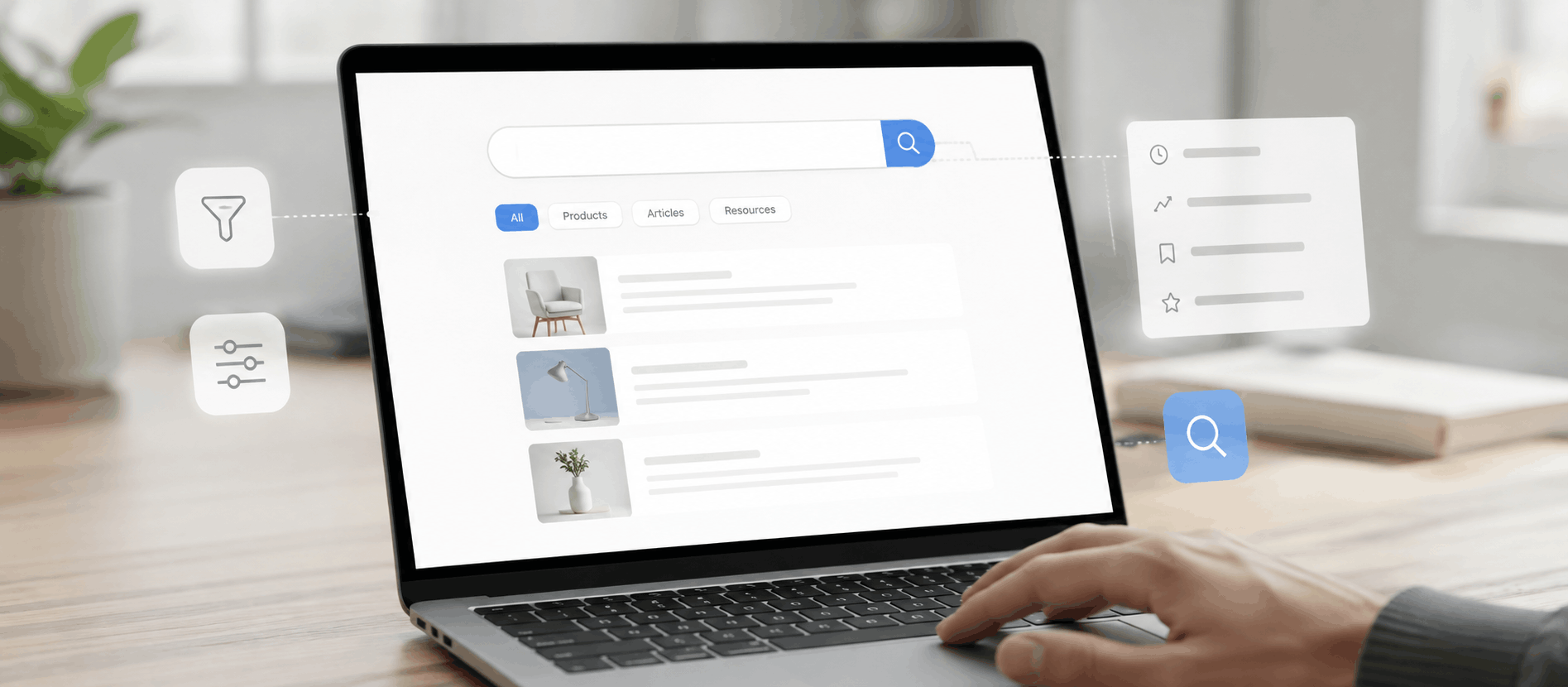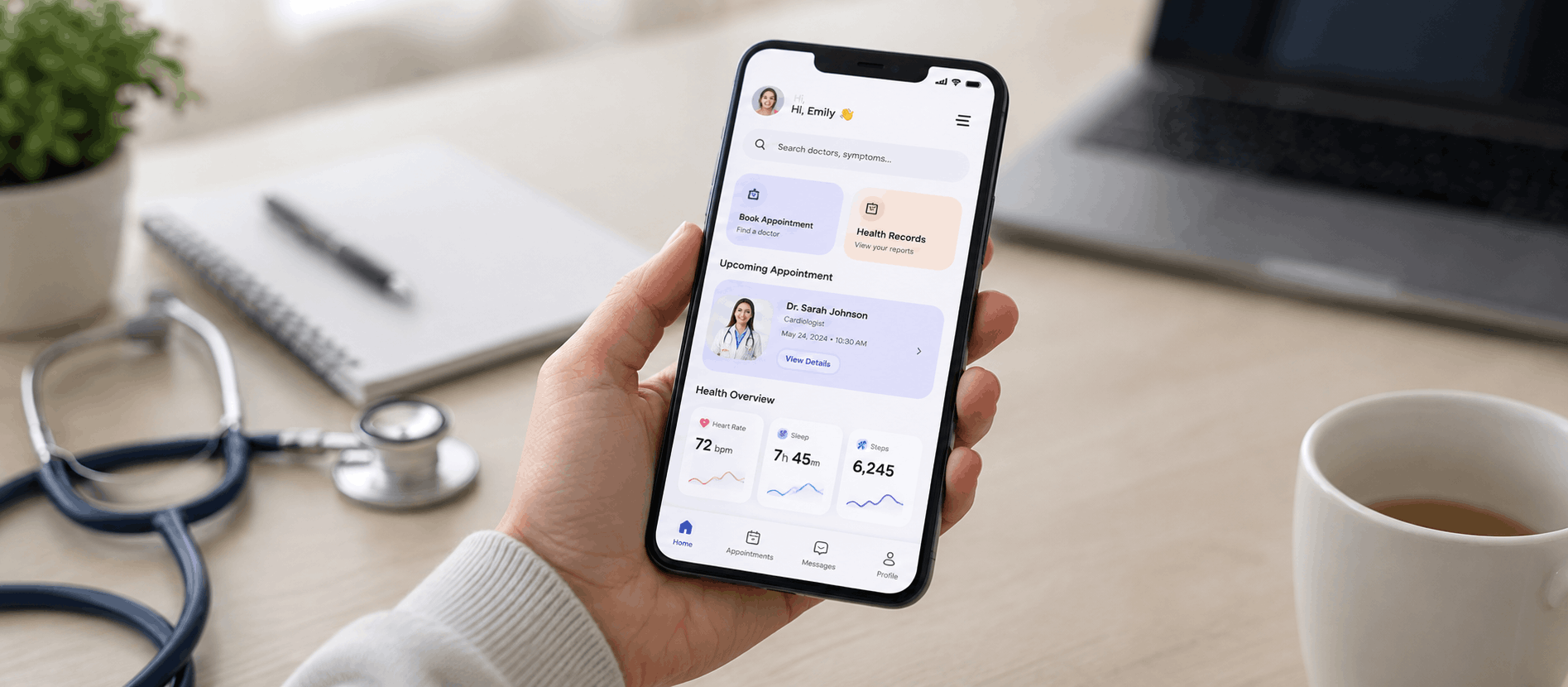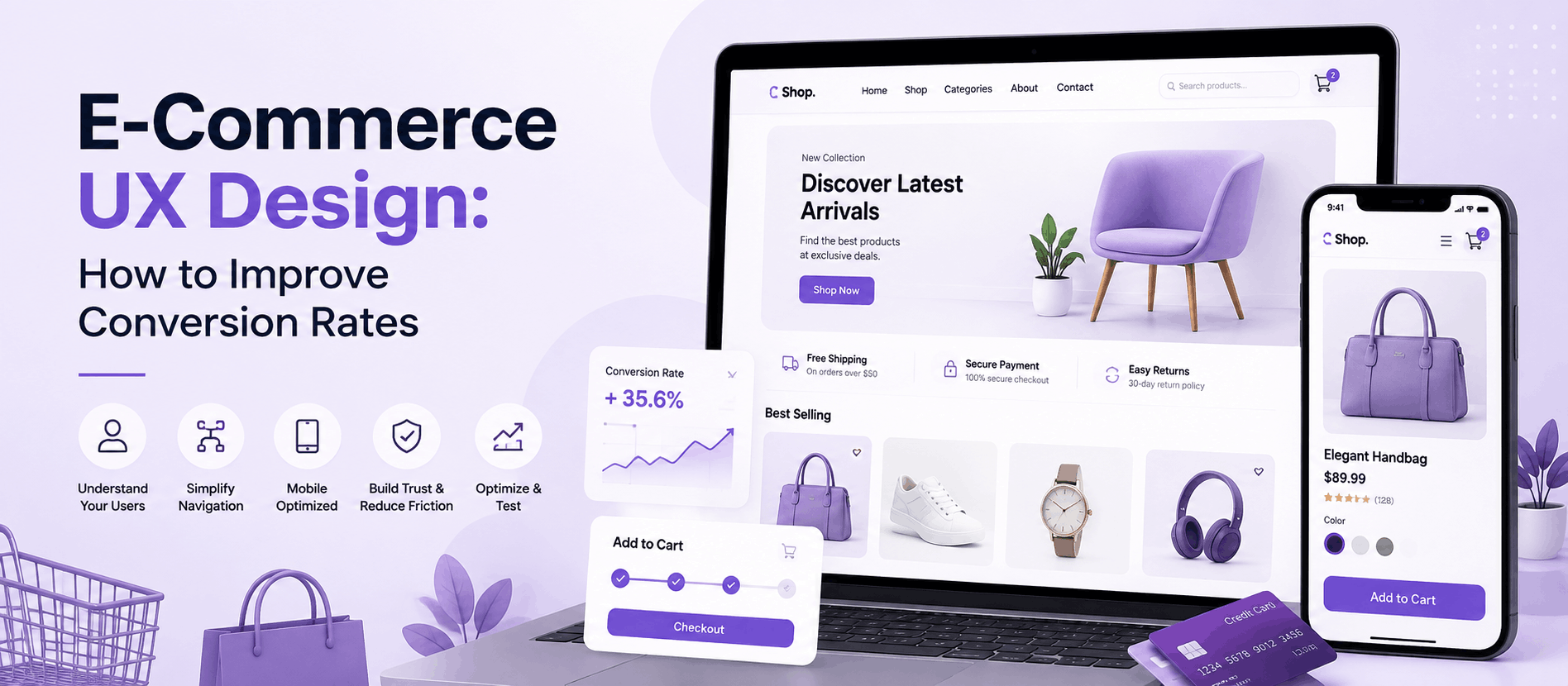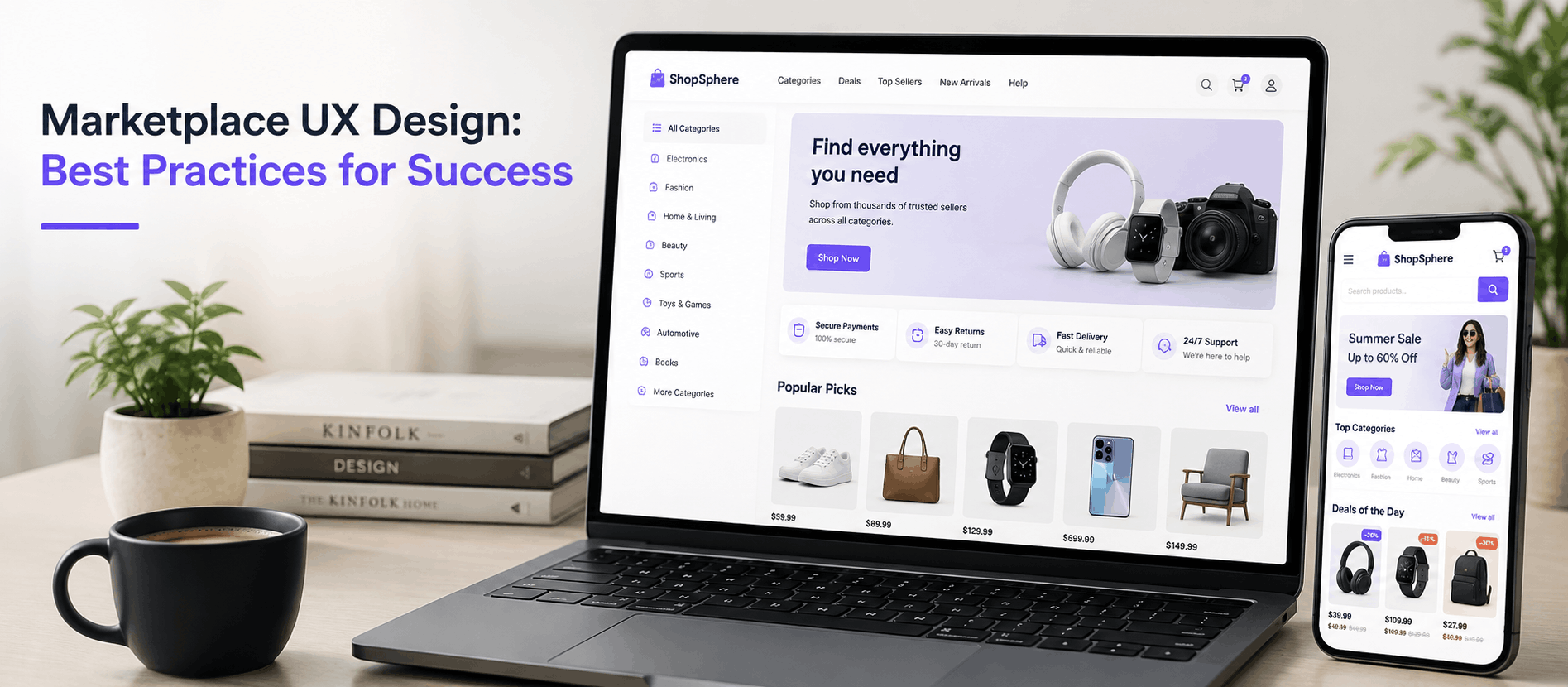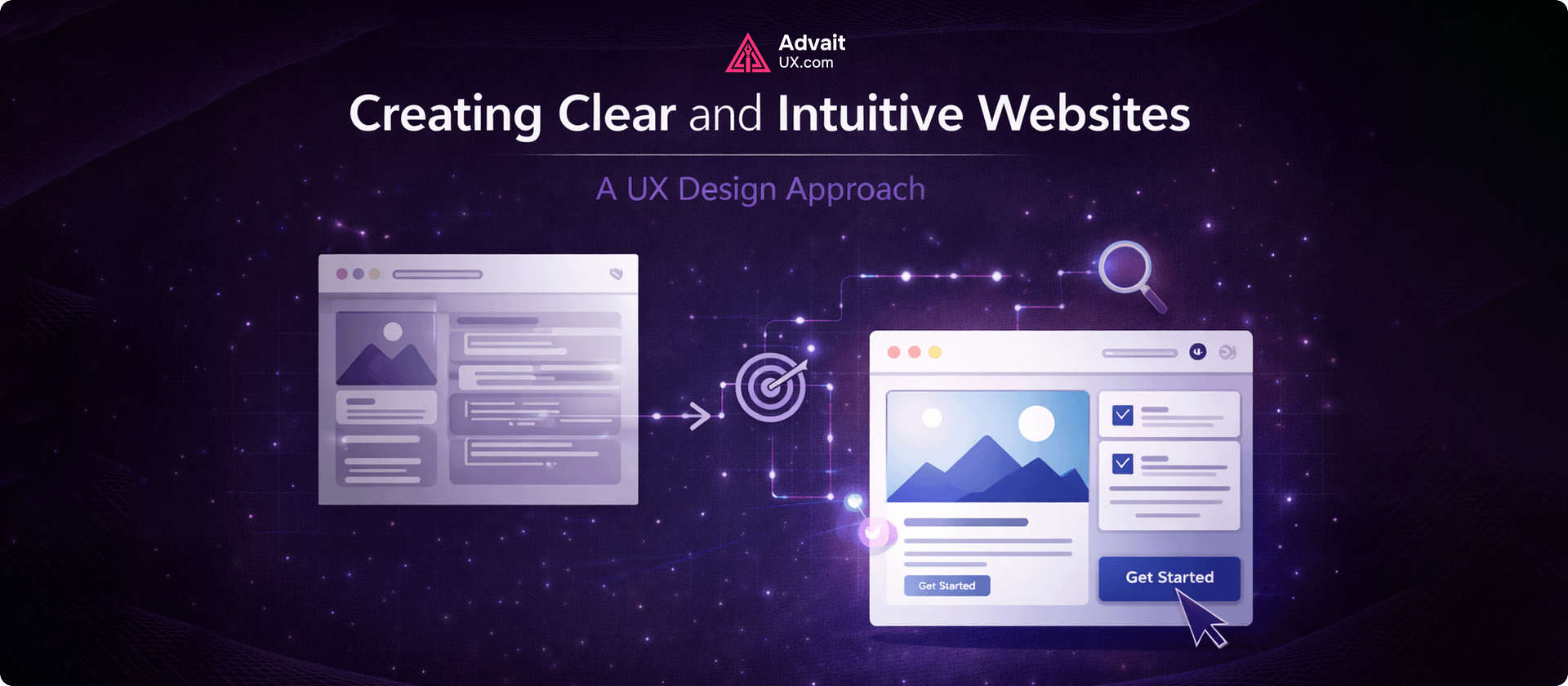
Short answer: Intuitive websites match users’ mental models — they use familiar patterns, predictable navigation, clear labels, consistent components, and visible feedback. Test clarity with a 5-second test (does the user grasp the page purpose?) and a first-click test on the top 3 tasks; 3–5 users surface most major issues. (Further reading: NN/g — 10 usability heuristics.)
📅 Last updated: June 6, 2026
⏱ 6 min read · 1,357 words
Related reading: see what UI/UX design is — the complete guide and information architecture. Want help applying this to your product? Explore our UI/UX design services.
In today’s fast-paced digital world, users don’t have the patience to “figure out” a website. They expect clarity, speed, and effortless interaction from the moment they land on a page. That’s where UX design plays a critical role. A well-crafted ui ux design website is not just about aesthetics—it’s about creating meaningful, intuitive experiences that guide users naturally toward their goals.Whether you’re a startup, a growing brand, or an established business, investing in UX Web Design can dramatically improve engagement, conversions, and long-term customer trust. This article explores how thoughtful UX design helps build clear, user-friendly websites—and how you can apply these principles effectively.
What Makes a Website “Clear & Intuitive”?
A clear and intuitive website feels almost invisible to the user. Navigation is seamless, content is easy to scan, and every action feels natural. Users don’t need instructions—they simply understand what to do.
Clarity in design comes from reducing friction. This means eliminating confusion, avoiding unnecessary elements, and guiding users with purpose. Intuition, on the other hand, comes from aligning design decisions with user expectations and behavior patterns.
When these two elements come together, your website becomes more than just a digital presence—it becomes a smooth, enjoyable experience.
Why UX Design Matters More Than Ever
User expectations have evolved. People compare your website not just with competitors, but with the best digital experiences they’ve ever had.
A strong UI UX Designer Portfolio Website often showcases how even small UX improvements—like better navigation or faster load times—can significantly impact user satisfaction.
Here’s why UX design is essential today:
- Users form opinions in seconds
- Poor experiences lead to high bounce rates
- Clear design improves trust and credibility
- Better usability increases conversions
In short, UX design directly affects your business outcomes.
Key Principles of Effective UX Web Design
1. User-Centered Thinking
Every successful ux web design process starts with understanding the user. Who are they? What are they trying to achieve? What challenges do they face?
Instead of designing for assumptions, designers rely on research—user interviews, analytics, and behavior insights—to guide decisions.
When your website reflects real user needs, everything feels more natural.
2. Simple & Predictable Navigation
Navigation should never be a puzzle. Users expect familiar patterns—clear menus, logical structure, and easy access to important pages.
A confusing layout can frustrate users instantly. A well-structured ui ux design website ensures that users always know where they are and where to go next.
Tips for better navigation:
- Keep menus concise
- Use clear labels
- Maintain consistency across pages
3. Visual Hierarchy That Guides Attention
Good UX design tells users what matters most—without saying a word.
Through size, color, spacing, and typography, designers create a visual flow that guides attention naturally. Headlines stand out, calls-to-action are easy to spot, and content feels organized.
This approach reduces cognitive load and makes decision-making easier for users.
4. Mobile-First & Responsive Design
More than half of web traffic comes from mobile devices. If your website doesn’t perform well on smaller screens, you’re losing opportunities.
A responsive Web Design Service ensures that your website adapts seamlessly across all devices—phones, tablets, and desktops.
Mobile-first design focuses on:
- Faster loading times
- Touch-friendly interactions
- Clean, minimal layouts
5. Speed & Performance Optimization
Even the most beautiful design fails if it’s slow. Users expect pages to load within seconds—and they won’t wait.
Performance is a critical part of UX. Fast-loading websites not only improve user experience but also rank better on search engines.
Optimizing images, reducing unnecessary scripts, and using efficient coding practices can make a huge difference.
6. Clear Calls-to-Action (CTAs)
Every website has a goal—whether it’s generating leads, selling products, or encouraging sign-ups.
Clear CTAs guide users toward that goal. Instead of vague buttons like “Click Here,” effective UX design uses action-driven language like:
- “Get Started”
- “Book a Free Consultation”
- “Explore Our Services”
A well-designed CTA feels like the next logical step.
Real-World UX Insight: Small Changes, Big Impact
From real-world UX projects, one common pattern stands out—small improvements often lead to significant results.
For example, simplifying a homepage layout, improving button visibility, or reducing form fields can dramatically increase conversions.
Many businesses focus heavily on visual design but overlook usability. However, a high-performing ui ux designer portfolio website often demonstrates that usability—not complexity—is what drives results.
At AdvaitUX, projects are approached with a clear focus: understand the user first, design second. This mindset consistently leads to more intuitive and effective digital experiences.
Common UX Mistakes to Avoid
Even well-designed websites can fall into common UX traps. Being aware of these can help you avoid costly mistakes.
Overloading the Interface
Too much content or too many elements can overwhelm users. Simplicity is key.
Ignoring User Feedback
User insights are invaluable. Ignoring them leads to disconnected design decisions.
Inconsistent Design Patterns
Switching styles or layouts across pages confuses users and reduces trust.
Weak Information Architecture
Poor content organization makes it harder for users to find what they need.
Avoiding these pitfalls ensures a smoother, more enjoyable experience.
How UX Design Supports SEO & Organic Growth
UX design and SEO are closely connected. Search engines prioritize websites that offer a good user experience.
A well-structured ui ux design website improves:
- Page engagement
- Time on site
- Bounce rate
- Accessibility
These factors contribute to better search rankings.
Additionally, clear content structure with proper headings and readable formatting makes it easier for both users and search engines to understand your website.
Building Trust Through Thoughtful Design
Trust is a key factor in user experience decision-making. A clean, professional, and intuitive design signals credibility.
Users are more likely to engage with a website that feels reliable and easy to use. Elements like clear messaging, consistent branding, and transparent information all contribute to building trust.
A strong web design service doesn’t just focus on visuals—it builds confidence.
Why Businesses Choose UX-Focused Design
Businesses that invest in UX design often see long-term benefits, including:
- Higher customer satisfaction
- Increased conversion rates
- Stronger brand perception
- Reduced development costs over time
A thoughtful ux web design approach ensures that your website works for your users—not against them.
Conclusion: Designing Experiences That Truly Work
Creating a clear and intuitive website is not about trends—it’s about understanding people. When you design with empathy, clarity, and purpose, your website becomes a powerful tool for growth.
From real-world experience, the most successful websites are not the most complex—they are the most thoughtful. They respect the user’s time, guide them effortlessly, and deliver value without friction.
At AdvaitUX, the focus is always on building meaningful digital experiences that combine strategy, usability, and aesthetics. Every project is approached with a deep understanding of user behavior and business goals.
If you’re looking to improve your website or build a high-performing ui ux designer portfolio website, now is the time to take action.
Visit AdvaitUX.com to explore UX-focused design solutions
Reach out for a consultation and discover how better UX can transform your digital presence
A great website doesn’t just look good—it feels right. And when it feels right, users stay, engage, and convert.
💡 Working on your own product? Start with a structured UX audit to surface the highest-impact friction in 1–3 weeks, or get in touch to scope a project with our Austin-based team. You can also see our recent UI/UX projects for examples.
Frequently Asked Questions
What makes a website intuitive?
Intuitive websites match users’ mental models — they use familiar patterns, predictable navigation, clear labels, consistent components, and visible feedback. If users have to think about how to use it, the design is in the way.
How do you test if a website is clear?
Run a 5-second test (does the user understand the page purpose?), a first-click test (do they click the right thing first?), and a brief usability test on the top 3 tasks. Three users uncover most major issues.
About the Author
Darshan Italiya is the Founder & UX Lead at AdvaitUX, a UI/UX design agency based in Austin, TX. A Google-certified UI designer with 7+ years of experience and 70+ shipped product designs, he writes about user-centered design, UX strategy, and conversion-focused interfaces. Learn more about AdvaitUX or connect on LinkedIn.