Short answer: User experience design matters because every friction point in a product costs conversion, retention, or support time. Forrester reports a well-designed UX can lift conversion by up to 200% and a better UI by up to 400% — UX is one of the highest-leverage investments a business makes. (Further reading: Forrester — the ROI of UX design.)
📅 Last updated: June 6, 2026
⏱ 5 min read · 1,174 words
This article is part of our guide on how good UX increases revenue.
User experience design affects how users see, trust, and use a digital product. A website or app can have great branding and smart features. But if users find it hard to navigate or finish tasks, it fails to serve its purpose.
The importance of UX design lies in how it connects user intent with business outcomes. When experiences feel intuitive, users stay longer, convert faster, and return more often. When usability breaks down, users abandon the product with little hesitation.
This article explains why user experience design is important. It shows how UX fits into product strategy. It also explains how businesses can use it for measurable growth.
What is User Experience Design?
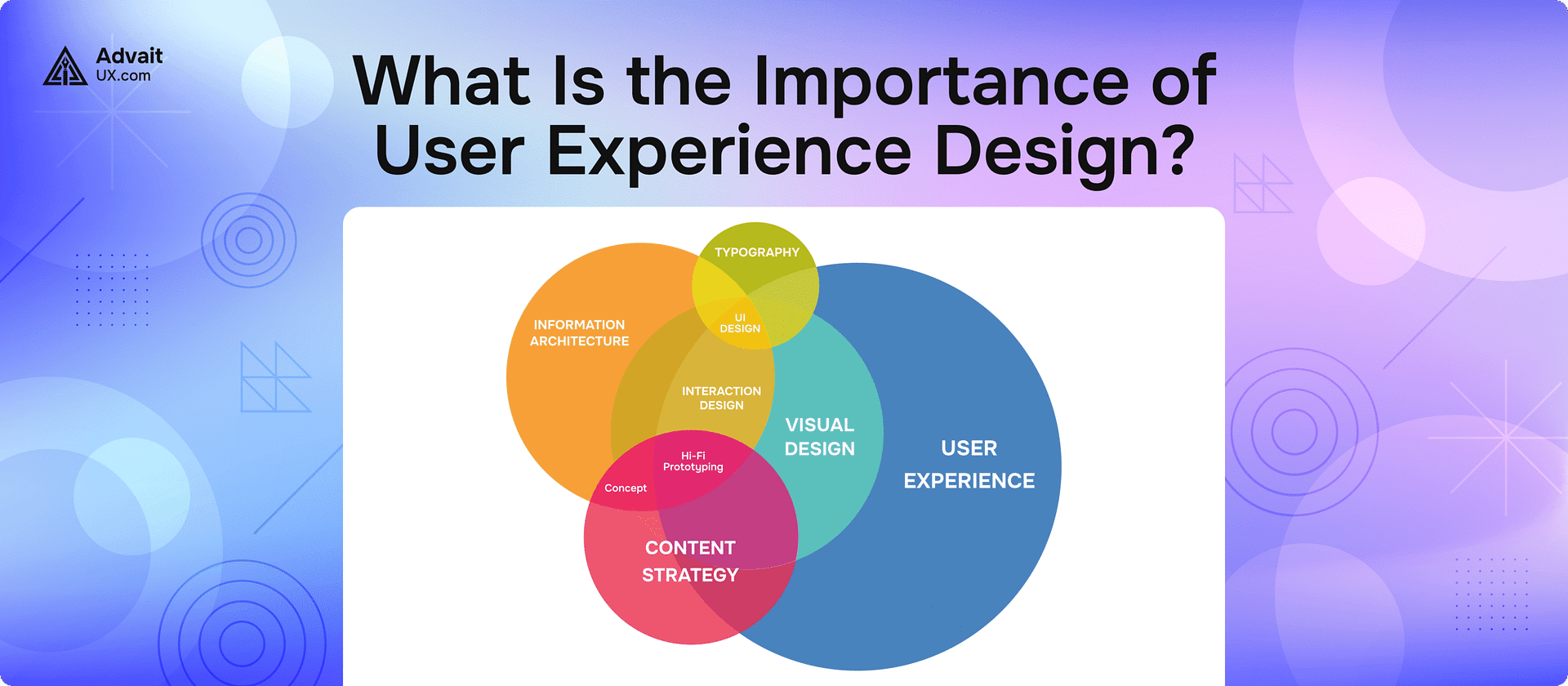
User experience design studies how people use digital products. It focuses on every point of interaction. It considers usability, accessibility, clarity, performance, and emotional response.
User experience design is not limited to screens or visuals. It includes task flows, content structure, interaction logic, and system feedback. Every click, scroll, and transition shapes how users feel about a product.
Strong UX design reduces effort. Users understand what to do, where to go, and what happens next—without confusion.
Why User Experience Design Is Important for Businesses
UX design is a growth driver, not a decorative layer.
When user experience is well designed, businesses see more engagement. They also get better conversion rates and lower support costs. Users complete tasks faster and encounter fewer obstacles.
From a strategic perspective, UX design helps businesses:
- Identify and remove friction points.
- Improve onboarding and adoption.
- Increase customer retention.
- Build long-term brand trust.
Many organisations start with an audit of their UX design. This helps to find usability issues that can hurt revenue and user satisfaction.
User Experience Design and User Trust
Trust is built through consistency, clarity, and predictability.
Clear navigation, easy-to-read content, responsive interfaces, and accessible interactions all build user confidence. When users feel in control, they are more likely to share information, buy things, or stick with a product.
Poor UX signals risk. Confusing forms and broken flows hurt credibility quickly. This is true for SaaS, healthcare, fintech, and enterprise platforms. Unclear messaging can damage trust, too.
UX design protects trust by eliminating unnecessary friction.
UX Design vs UI Design: Understanding the Difference
UX and UI are often mentioned together, but they serve different roles.
UX design focuses on problem-solving, structure, and user behaviour. UI design focuses on visual clarity, branding, and interface presentation.
A visually attractive interface cannot compensate for poor usability. Likewise, a functional experience with a weak visual hierarchy can feel unprofessional.
Many businesses team up with a UI and UX design agency. They combine both areas into one smooth process.
Key stages of the User Experience design process
1. User Research and Discovery
Every effective UX process starts with research.
User interviews, surveys, usability testing, and analytics reveal real behaviours and pain points. This stage replaces assumptions with evidence.
Research ensures that design decisions reflect user needs rather than internal opinions.
2. Information Architecture and User Flows
Once we gather insights, we organise the information in a logical structure.
Navigation systems, content hierarchy, and task flows fit how users think. They are designed to make things easier for users. This reduces cognitive load and prevents decision fatigue.
At this stage, many UX design fixes emerge—especially in complex or legacy products.
3. Wireframing and Prototyping
Wireframes and prototypes translate strategy into experience.
They allow teams to test layouts, interactions, and flows before development begins. Early testing saves time and budget by catching usability issues early.
This step is critical for validating ideas with real users.
4. Visual Design and Interface Optimisation
Visual design enhances usability, not just aesthetics.
Typography, spacing, colour contrast, and visual hierarchy guide attention and improve comprehension. Good UI design supports accessibility across devices and user abilities.
This is where brand identity and usability intersect.
5. Testing, iteration, and continuous improvement
UX design is not a one-time activity.
User expectations evolve. Products grow. Continuous testing and iteration ensure the experience remains effective and relevant.
Regular audits and performance reviews help to maintain usability over time.
UX Design as a Strategic Advantage
UX design plays a strategic role in product development.
A strong UI strategy aligns business goals with user needs. It helps teams prioritise features. It cuts wasted development effort. It also focuses on important outcomes.
UX strategy looks ahead. It predicts user behaviour and designs for it before launch. This way, we avoid reacting to problems later.
This strategic mindset separates mature digital products from short-lived ones.
Real-World Impact of UX Improvements
UX improvements often deliver immediate results.
Simplifying forms, clarifying calls to action, or changing navigation can greatly increase conversions. These changes are rarely complex, but they are intentional.
Experienced UX teams know that the best experiences feel effortless. Users do not notice the design—they notice the ease.
Why do businesses partner with UX/UI agencies?
Maintaining an in-house UX team with research, strategy, and execution expertise is challenging.
A Specialised UX/UI agency brings:
- Cross-industry experience
- Proven research frameworks
- Aim problem-solving
- Scalable design systems
At AdvaitUX, UX design is treated as a business tool. The focus is on solving real user problems while supporting measurable business growth.
AdvaitUX works with start-ups and enterprises. They create digital experiences that focus on users. These experiences come from research, strategy, and practical work.
Conclusion: User Experience Design Shapes Product Success
The importance of user experience design extends beyond usability. It influences trust, engagement, and long-term customer relationships.
UX design brings clarity to digital products. It removes friction, guides behaviour, and aligns user needs with business objectives.
Investing in UX helps businesses improve product performance and build customer loyalty. For UX designers, it is a responsibility to design ethically and intentionally.
If you want to check your experience, improve your UX, or get UX/UI help, AdvaitUX can help. We offer consultations and full design services. Our focus is on real results.
User-centred design starts with understanding people—and that understanding drives sustainable growth.
💡 Working on your own product? Start with a structured UX audit to surface the highest-impact friction in 1–3 weeks, or get in touch to scope a project with our Austin-based team. You can also see our recent UI/UX projects for examples.
About the Author
Darshan Italiya is the Founder & UX Lead at AdvaitUX, a UI/UX design agency based in Austin, TX. A Google-certified UI designer with 7+ years of experience and 70+ shipped product designs, he writes about user-centered design, UX strategy, and conversion-focused interfaces. Learn more about AdvaitUX or connect on LinkedIn.