Many businesses still treat UX as a “design upgrade.” In reality, UX is a revenue strategy. Companies that focus on good user experience don’t just make better products. They also reduce friction, build trust, and help users agree more easily.
Agency-led projects on websites, SaaS platforms, and digital products show one clear thing. When UX gets better, revenue goes up. This article explains why that happens. It shows how UX helps business growth. It also tells what companies can expect from a structured UX approach.
What is Good UX design, really?
User experience (UX) design looks at how people use a product and how it feels to them.
It looks at:
- Ease of use
- Clarity of information
- Emotional response
- Effort required to complete tasks
Good UX ensures users can achieve their goals without confusion or frustration. When users succeed easily, businesses benefit financially.
The Direct Link Between Good UX and Revenue
Revenue depends on user decisions.
Those decisions—signing up, purchasing, upgrading, or returning—are shaped by experience. UX influences:
- How quickly users understand value.
- How much effort do actions must?
- How trustworthy the product feels?
This is where user experience psychology plays a major role. UX design matches interfaces to how people think, choose, and act in real life.
Why poor UX costs you money
Bad UX doesn’t always look broken. Often, it just feels “slightly off.”
Common revenue-draining UX issues include:
- Confusing navigation
- Overloaded pages
- Unclear calls to action.
- Slow task completion
- Lack of trust signals.
Each small friction point increases drop-offs. Over time, these losses add up to significant missed revenue.
How UX psychology drives better conversions
Good UX is grounded in psychology, not guesswork.
It considers how users:
- Scan rather than read.
- Avoid cognitive overload.
- Seek familiarity and predictability.
- Respond emotionally to design cues.
UX design lowers mental effort and uncertainty. This helps users feel confident as they move forward. Confident users convert more often—and spend more over time.
The Principles of UX That Impact Revenue
Certain principles of UX consistently influence business outcomes.
These include:
- Clarity: Users instantly understand what to do next.
- Consistency: Familiar patterns reduce learning effort.
- Feedback: Users know their actions worked.
- Accessibility: More users can successfully engage.
When these principles are ignored, revenue leaks silently. When applied well, they compound value across every interaction.
The Good UX process that drives business growth
Revenue-focused UX follows a clear process of UX, not isolated design decisions.
1. Research and Understanding of Users
UX begins with understanding real users, not assumptions.
Research uncovers:
- User goals and motivations
- Pain points and objections
- Context of use
This insight helps businesses avoid making features that users don’t need or won’t pay for.
2. Defining Problems That Affect Revenue
Not all UX problems are equal.
Good UX teams prioritise issues that:
- Block conversions
- Increase abandonment
- Reduce trust
This strategic focus ensures that design efforts directly support revenue, not just aesthetics.
3. Structuring Journeys and Flows
Clear journeys reduce hesitation.
UX designers simplify steps, remove unnecessary choices, and guide users naturally towards outcomes. Fewer obstacles mean faster decisions and higher completion rates.
4. Designing and Validating Interactions
Wireframes and prototypes test ideas early.
This phase allows teams to:
- Confirm assumptions
- Catch usability issues early.
- Iterate without high development costs.
Fixing problems here protects both timelines and budgets.
5. Testing, learning, and improving.
UX doesn’t stop at launch.
Usability testing and analytics reveal what works in real conditions. Continuous improvement ensures that revenue gains are sustainable, not temporary.
Who’s involved in revenue-driven UX?
Good UX that drives revenue requires collaboration.
It typically includes:
- UX researchers
- UI designers
- Product managers
- Developers
- Business stakeholders
Many companies opt for a dedicated UX consultant or agency. This helps them get outside expertise, maintain objectivity, and use proven frameworks.
Why Location and Context Matter in UX Strategy
Working with a local agency often adds strategic value.
A UI/UX design agency in Surat knows local user behaviour, business limits, and market needs. It also follows global UX standards.
Local knowledge and expert UX skills work together. They help businesses create experiences that connect with their audience.
Where UX Design Impacts Revenue the Most
UX-driven revenue gains appear across:
- Marketing websites
- SaaS onboarding and upgrades
- E-commerce checkout flows
- Subscription renewals
- Internal tools that improve team efficiency.
Any digital touchpoint that affects decisions is a chance for UX to boost revenue.
Real Business Benefits of Investing in UX
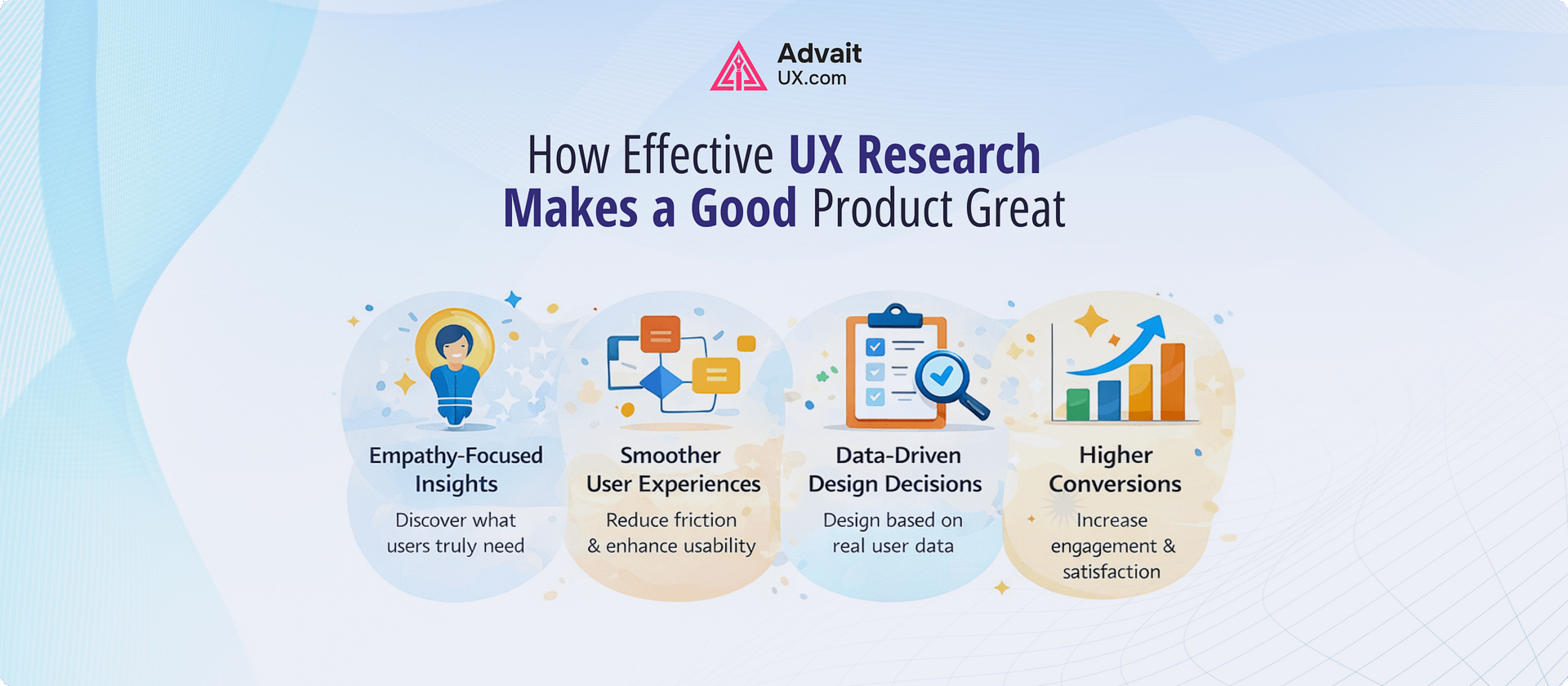
From hands-on agency experience, businesses that invest in UX consistently see:
- Higher conversion rates
- Improved customer retention
- Lower support and training costs.
- Stronger brand loyalty.
These benefits add up over time. So, UX is one of the best investments for returns in digital product development.
Why UX is a long-term revenue strategy.
Short-term tactics push users.
Good UX supports users.
When products respect user needs, reduce friction, and communicate clearly, revenue grows naturally. UX builds systems that scale, rather than hacks that fade.
This is why UX is not a one-time project but an ongoing business capability.
The Role of AdvaitUX in Revenue-Focused UX
At AdvaitUX, UX is treated as a strategic growth lever.
The focus is on:
- Ethical, user-first design
- Psychology-backed decision-making
- Measurable business outcomes
Whether we’re a strategic partner, UX consultant, or design agency, our goal is simple. We help businesses grow. We do this by making the user experience better.
Final Thoughts: Good UX pays for itself.
Good UX doesn’t just look better. It works better.
It helps users make decisions faster, trust brands more, and return more often. Businesses that focus on UX stop fighting user behaviour. Instead, they start to benefit from it.
Revenue growth results from clarity, not pressure.
Ready to turn UX into a revenue driver?
A UX-led approach can improve conversions. It also boosts retention and product performance. This can unlock real business value.
AdvaitUX provides UX consulting, audits, and full UX/UI design services. We focus on measurable growth instead of assumptions.